Weather's Quiet Grip: How Wind Shifts and Rain Patterns Tweak Live Pricing on Grass Courts, Muddy Tracks, and Open Pitches
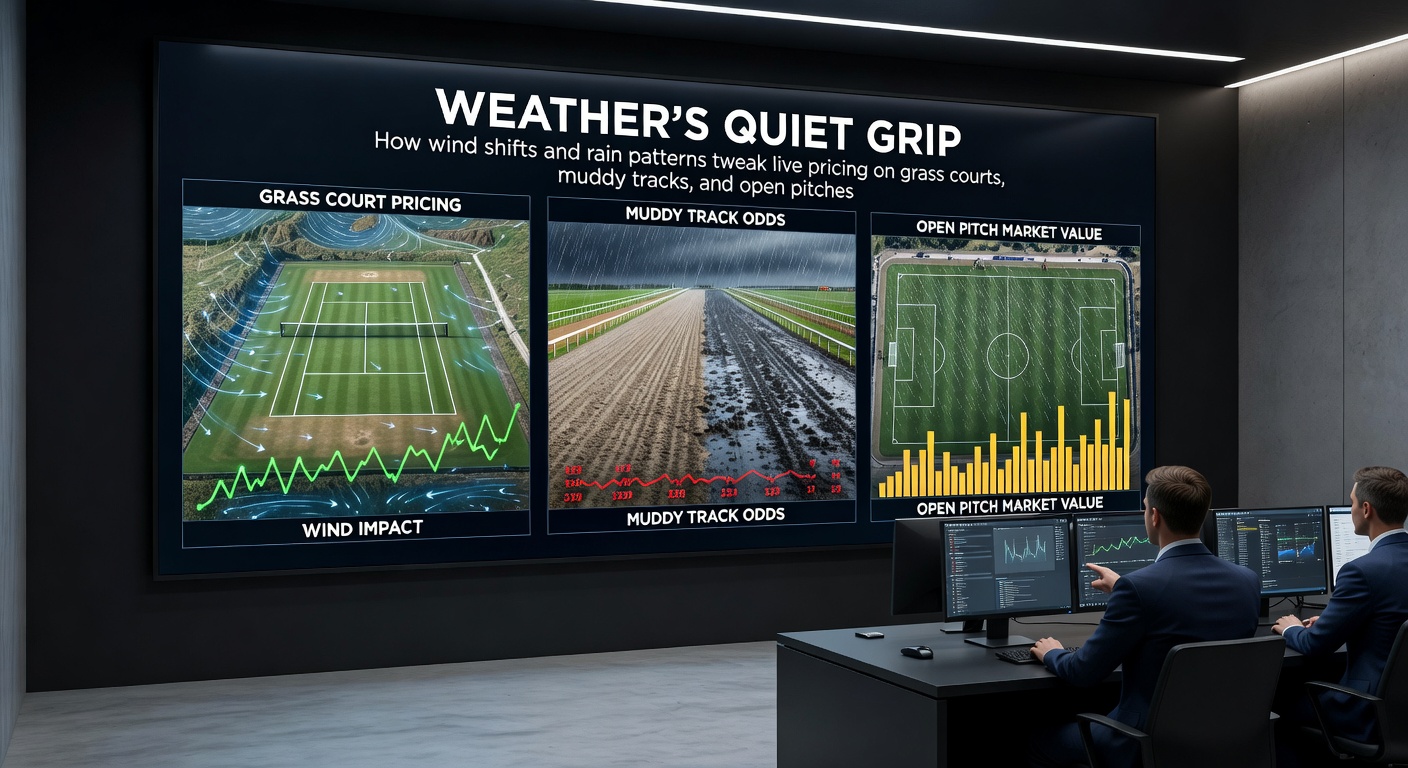
Weather conditions exert measurable influence over live betting markets across multiple sports, particularly where surfaces respond directly to atmospheric changes. In May 2026, ongoing events such as clay-to-grass transitions in tennis, spring racing festivals on variable turf, and late-season football fixtures continue to demonstrate how wind and precipitation alter match dynamics and force rapid adjustments in bookmaker algorithms. Data from meteorological agencies shows that even modest shifts in wind speed or rainfall intensity correlate with updated odds on individual points, race times, and goal probabilities within minutes of detection. Bookmakers integrate real-time feeds from on-site sensors and weather stations to recalibrate live pricing, since grass courts lose grip under drizzle while muddy tracks increase energy demands on horses. Observers note that these adjustments appear first in in-play markets rather than pre-match lines, because algorithms prioritize immediate environmental inputs over historical averages. Research from the National Oceanic and Atmospheric Administration indicates that wind vectors exceeding 15 knots produce statistically significant deviations in ball trajectory on exposed surfaces, prompting sportsbooks to widen spreads on serve percentages and finishing positions.
Grass Court Dynamics Under Variable Winds
Tennis markets on grass respond swiftly when crosswinds alter serve angles and bounce consistency. Players often adapt footwork within a single game, yet live odds reflect these micro-adjustments through incremental movements in first-serve win probabilities. Studies tracking Wimbledon warm-up events reveal that headwinds above 12 mph reduce ace rates by measurable margins, leading operators to shorten prices on return winners while lengthening those on unforced errors. Rain patterns compound the effect by slowing court pace, which in turn lengthens rallies and favors baseline-oriented competitors whose styles bookmakers then price more favorably in extended set markets. Live traders monitor radar loops alongside point-by-point data, updating models every few minutes during changeable spells. When showers interrupt play, suspended matches trigger temporary market halts followed by revised lines that incorporate court drying times and player recovery intervals. Those monitoring these shifts frequently observe tighter spreads on tie-break outcomes once rain resumes, because historical datasets show higher variance in short sets under intermittent moisture.

Muddy Track Adjustments in Horse Racing
Horse racing markets on turf tracks register pronounced changes once rainfall saturates the surface and wind influences straightaway sections. Going descriptions shift from good to soft or heavy within hours, directly affecting speed figures that underpin live odds on individual runners. Trainers report altered stride patterns on waterlogged ground, while jockeys alter tactics to conserve energy for later stages, prompting bookmakers to revise place probabilities and each-way terms accordingly. Wind patterns add another layer on exposed tracks, where gusts can push horses off their racing line or exaggerate late surges down the home straight. Algorithms incorporate wind-adjusted pace profiles derived from sectional timing data, resulting in fluctuating odds on front-runners versus closers. Industry reports compiled across Australian and North American racing jurisdictions document that heavy rain episodes lasting more than 30 minutes produce average reductions in winning times of several seconds, enough to reorder market hierarchies mid-card.
Football Pitches and Precipitation Effects
Open football pitches experience rapid surface alterations under rain, with standing water influencing ball roll, player traction, and crossing accuracy. Live goal markets tighten or widen depending on whether conditions favor low-driven shots or lofted passes that defenders struggle to clear. Wind similarly affects set-piece delivery, pushing odds on headed goals higher when gusts assist attacking deliveries from wide areas. Data collected during European league fixtures demonstrates that sustained rainfall above 5 mm per hour correlates with elevated draw probabilities, as teams adopt more cautious approaches on slippery surfaces. Bookmakers therefore adjust over/under totals and Asian handicap lines continuously, drawing from pitch sensor readings and player tracking metrics that quantify reduced sprint distances in wet conditions. Observers tracking May 2026 fixtures note similar patterns emerging in domestic cup competitions played on natural grass venues exposed to spring showers.
Algorithmic Responses and Market Liquidity
Sportsbooks employ layered models that combine weather inputs with historical performance under analogous conditions, enabling near-instantaneous price revisions once thresholds are crossed. Liquidity providers on betting exchanges often amplify these movements by reacting faster to visible environmental cues than traditional fixed-odds operators. When multiple variables align, such as wind plus rain on a grass court during a deciding set, spreads widen temporarily to manage risk before stabilizing around new equilibria. Industry analyses from research institutions across North America and Europe highlight that transparent weather data integration reduces margin leakage for operators while giving informed bettors narrower windows to exploit discrepancies. Those following sectional and point-by-point feeds alongside meteorological updates continue to identify value in niche markets such as next-point winner or sectional timing, where surface responses remain most pronounced.
Conclusion
Atmospheric variables continue to shape live pricing across grass courts, muddy tracks, and open pitches through direct effects on player and equine performance. Real-time integration of wind and rainfall data enables bookmakers to maintain accurate odds that reflect evolving conditions rather than static expectations. As sensor technology and predictive modeling advance, these adjustments are expected to become even more granular, sustaining the quiet but persistent influence of weather on market dynamics throughout the 2026 season and beyond.