Platform Divergences in Multi-Sport Chained Bet Pricing for Soccer, Racing, and Tennis Events
Tina Roth · Aug 22, 2026

Platform Divergences in Multi-Sport Chained Bet Pricing for Soccer, Racing, and Tennis Events
Chained bets combine selections from soccer matches, horse races, and tennis tournaments into single wagers where each leg must succeed for the full payout, and platforms apply distinct algorithms that create measurable price gaps across these sports. These differences emerge from variations in liquidity management, risk thresholds, and data integration methods that operators use when constructing accumulators and system bets.
Pricing Structures Across Soccer Accumulators
Soccer chained bets often link match results, both-teams-to-score outcomes, and over-under totals, yet operators adjust margins based on league liquidity and fixture congestion. One analysis from August 2026 showed that certain platforms offered tighter combined odds on Premier League four-folds during midweek rounds compared with weekend selections, while others widened spreads on European competitions where correlation risks rise. Data compiled by the American Gaming Association indicates that automated pricing engines recalibrate margins in real time when injury news or weather updates alter implied probabilities, producing noticeable shifts between operators within the same hour.
Observers note that smaller platforms sometimes maintain static odds longer than larger ones, allowing temporary value windows for chained soccer selections that span domestic cups and continental ties. This lag occurs because limited staff resources delay full integration of live feeds, whereas high-volume operators refresh lines continuously through algorithmic models.
Horse Racing Multiples and Platform Adjustments
Racing accumulators frequently incorporate win, place, and exacta combinations across meetings, and platforms diverge sharply when applying place terms or each-way reductions. In August 2026, comparisons revealed that some operators shortened exacta doubles on major festival cards by up to 15 percent relative to competitors, citing higher payout exposure during peak liquidity periods. Researchers tracking these movements found that firms with deeper reserve pools absorbed larger stakes without immediate price adjustment, while others triggered margin increases sooner to protect against clustered outcomes at the same track.
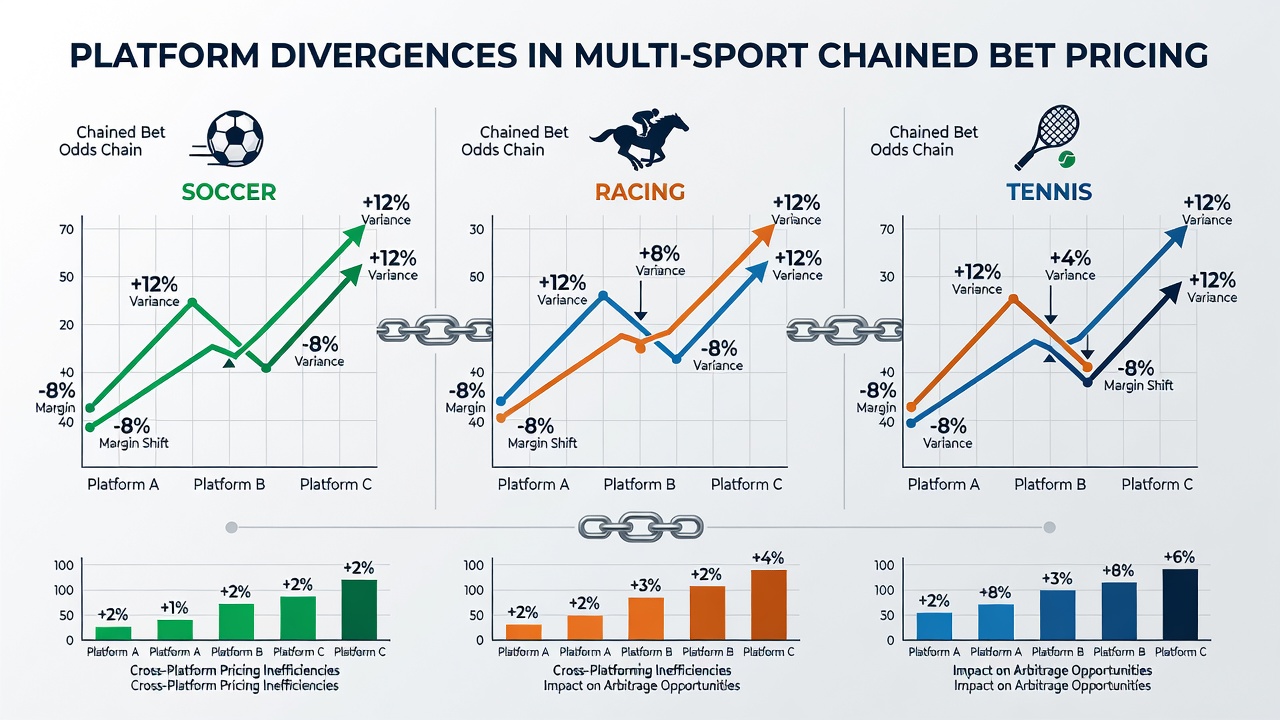
Those who monitor racing data feeds report that late scratches and track condition changes prompt uneven responses, with some platforms updating chained prices within minutes and others maintaining original lines until the next scheduled refresh cycle. This creates windows where multi-race yankees or patents show divergent implied probabilities depending on the operator chosen.
Tennis Event Chains and Live Pricing Variations
Tennis accumulators combine set winners, game totals, and handicap lines, and platforms apply different volatility buffers when constructing these chains because individual matches can shift rapidly. During the 2026 hard-court swing, several operators widened combined odds on multi-surface parlays that mixed ATP and WTA selections, whereas others held tighter spreads by relying on historical head-to-head datasets rather than surface-specific adjustments. European Gaming and Betting Association reports highlight that real-time point-by-point data integration produces faster repricing on tiebreak and super-tiebreak outcomes, leading some platforms to adjust chained tennis bets more aggressively than competitors still using batch updates.
Platform differences also appear in how operators handle rain delays or schedule changes that affect multiple tournaments simultaneously, with some applying broader safety margins across the entire chain while others isolate adjustments to the affected legs only. Observers tracking these patterns note that such selective updates create measurable price gaps that persist until all platforms complete their recalibrations.
Cross-Sport Correlation Models
When operators combine soccer, racing, and tennis legs into one accumulator, they must account for limited correlation between the events, and platforms apply distinct weighting systems to these low-correlation chains. In August 2026, several major operators published updated risk matrices that assigned higher margins to mixed-sport accumulators than to single-sport versions, reflecting internal simulations of payout clustering during busy sporting periods. These matrices differ in how they incorporate historical variance data, with some firms emphasizing recent form streaks and others prioritizing long-term statistical baselines.
Industry tracking shows that operators using proprietary simulation software tend to produce wider spreads on multi-sport chains compared with those relying on third-party pricing services, because the in-house models incorporate additional layers of reserve calculations for rare but high-impact outcome sequences.
Conclusion
Platform divergences in multi-sport chained bet pricing arise from differences in liquidity handling, data refresh speeds, and correlation modeling across soccer, racing, and tennis selections. These variations produce observable price gaps that shift with fixture schedules, market conditions, and operator-specific risk protocols, as documented in multiple industry datasets during August 2026. Bettors comparing chained options across events therefore encounter distinct pricing structures that reflect each platform's approach to balancing exposure and volume.